
Call this Sunday to Get $35 OFF.
Hire Local Trusted Electricians Now
Call This Sunday to Get$35 OFF
Call this Sunday to Get $35 OFF.
Hire Local Trusted Electricians Now
Call This Sunday to Get$35 OFF
Look at the outlets in your home. Do they have two slots or three? That third hole might seem like a minor detail, but it represents the difference between a safe electrical system and a disaster waiting to happen.
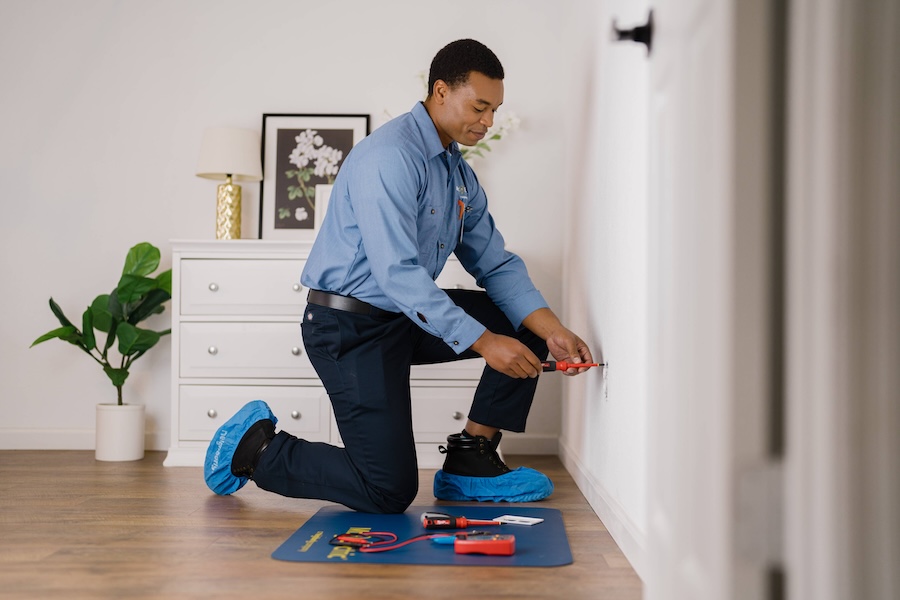
While countless homeowners use them daily, here's the uncomfortable truth: those two-prong outlets create serious safety risks every time you plug something in. And the longer you wait to upgrade, the more you gamble with your safety.
In this brief article brought to you by Mr. Electric, we break down what separates two-prong outlets from three-prong outlets and why upgrading is essential.

Everything in your home, from the lights and kitchen appliances to your HVAC system, depends on electricity for power. When electrical problems arise,…
Read More
A circuit breaker protects you and your family from electrical hazards. When it begins to malfunction, the risks can quickly snowball from a…
Read More
Ceiling fans add style and improve energy efficiency, but the process of installing or replacing a ceiling fan isn't always as simple as…
Read More
Your home's electrical system is something you rely on every day, but it doesn’t always make it obvious when there’s a problem. Flickering…
Read MoreTwo-prong outlets have two slots. One slot connects to the “hot” wire that carries electricity to your device. The other slot connects to the “neutral” wire that carries electricity back to your electrical panel, thereby completing the circuit.
This setup works fine for delivering power. Electricity flows to your device, powers it, and returns through the neutral wire. For basic functionality, that's enough.
But here's what's missing: a “ground” wire for when the system glitches.
Electrical faults are a reality. Insulation breaks down, wires touch metal casings, lightning strikes create power surges, short circuits develop, and so on. When these problems happen, excesss electricity needs somewhere safe to go. Two-prong outlets don't provide that path.
Without grounding, fault current flows wherever resistance is lowest. Sometimes that's through the neutral wiring or the metal case of your appliance; other times it’s through your body when you touch that appliance or outlet.
Three-prong outlets add a third connection: the ground wire. This wire doesn't carry electricity during normal operation. It just waits on standby – ready to redirect dangerous current safely into the earth if something goes wrong.
Think of grounding like a safety valve. Pressure builds in a system, and the valve releases it harmlessly before damage occurs. The ground wire works the same way: it provides a safe release path for dangerous electrical current.
This isn't theoretical. The National Electrical Code requires grounding, and for good reason: it prevents thousands of injuries and deaths every year. That third prong literally saves lives.
Some homeowners buy two-prong to three-prong adapters and think they've solved the problem. Fact check: they haven't. Instead, they've created a false sense of security.
Those adapters only work if you properly ground them, but here’s the catch: if your outlet box isn't grounded (and most aren't in homes with two-prong outlets), then connecting that tab does nothing. You've added a third prong without adding actual grounding.
Current electrical codes require grounded outlets in all new construction and major renovations. While codes don't force you to upgrade existing two-prong outlets immediately, you’d be wise to arrange an electrical upgrade.
In fact, some insurance companies refuse coverage or charge higher premiums for homes with ungrounded electrical systems. If a fire or injury occurs and investigators trace the cause to ungrounded outlets, your insurance might deny your claim.
Upgrading from two-prong to three-prong outlets requires more than swapping outlet faces. A certified electrician must make sure that grounding exists at each outlet box (or install it where it doesn't).
If grounding exists, the electrician tests for ground then simply installs three-prong outlets. In homes without grounding, the electrician runs ground wires from outlets back to your electrical panel or to grounding points.
Ready to make your home safer? Call or message Mr. Electric to get in touch with our office team. We’re happy to schedule an appointment or arrange urgent electrical repair for as soon as possible.
Look at the outlets in your home. Do they have two slots or three? That third hole might seem like a minor detail,…
Read More
When thinking about upgrading a home, many homeowners consider heated floors, EV charging stations, outdoor entertainment areas, smart home systems, and so forth.…
Read More
Electricity feels safe. You flip switches hundreds of times daily and plug devices into outlets constantly – all without a second thought. Everything…
Read More
Nothing disrupts your routine faster than a circuit breaker tripping right in the middle of something important. Lights go out, appliances shut down,…
Read More